Project: Proof of Attendance System

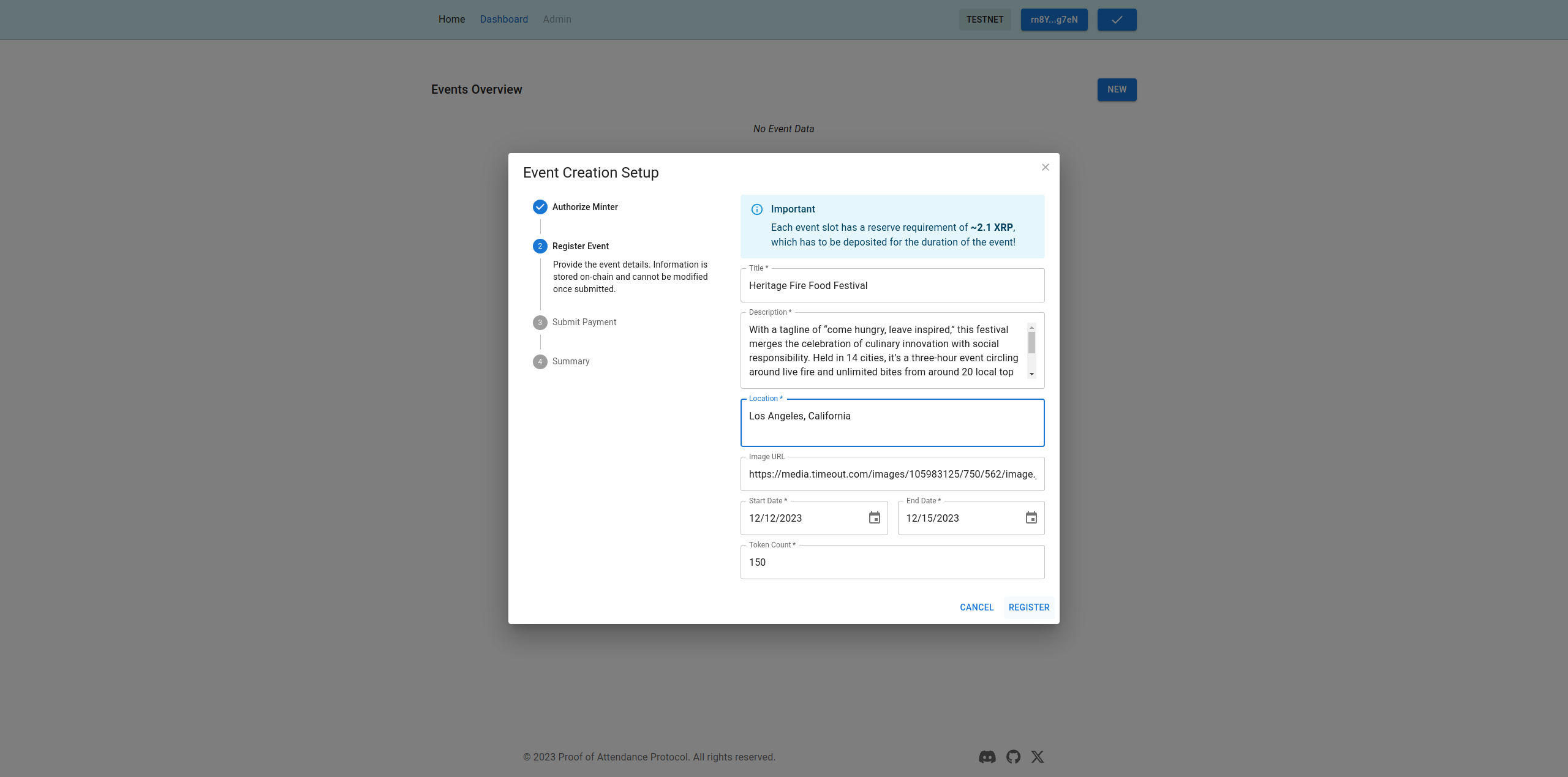
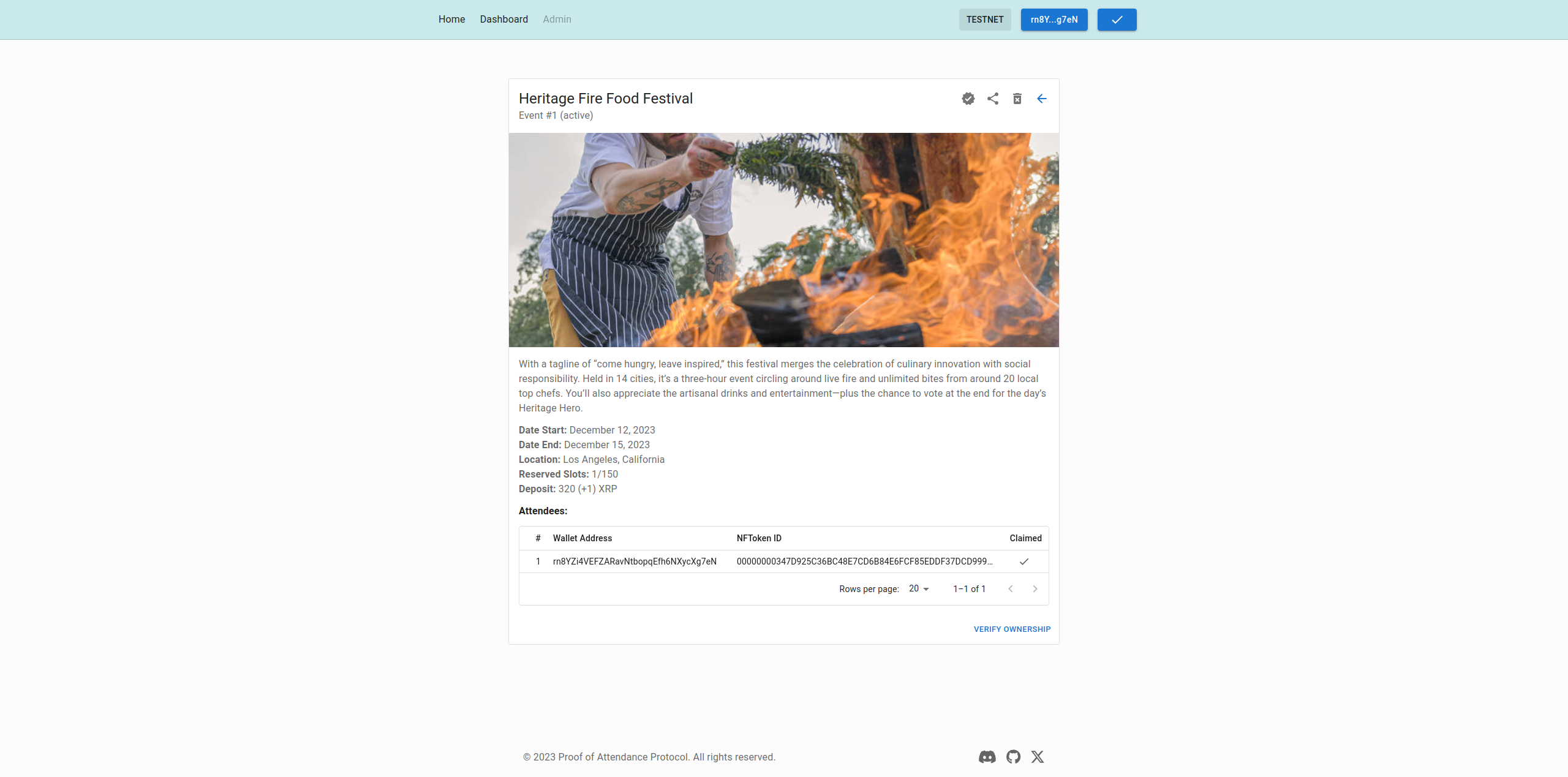
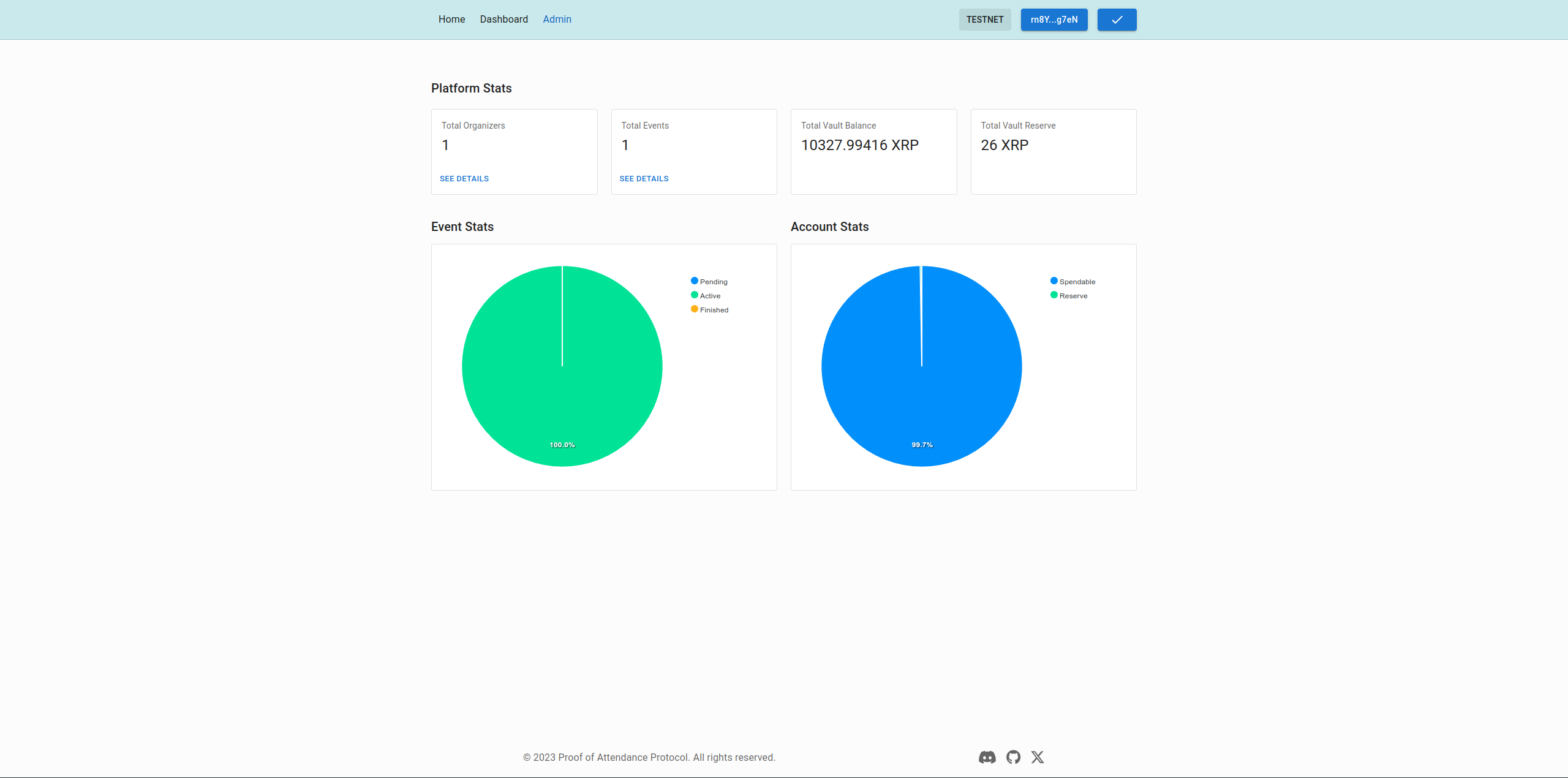
As part of the XRPL Bounty Program, I developed a user-friendly web app that allows event organizers to issue and distribute attendance NFTs using blockchain technology. The app simplifies the process of creating and managing events, distributing NFTs, and tracking long-term attendance, enabling organizers to reward loyal participants and offer them additional resources. Designed for non-technical users, the platform is easy to use for both organizers and attendees. Organizers can manage events and NFTs with ease, while attendees can effortlessly claim and verify their NFTs.
Key features:
- Simple: Organizers can easily create and manage events through the intutive web app.
- Secure: Leverage XLS-20 NFTs on the XRP Ledger for verifiable attendance using blockchain technology.
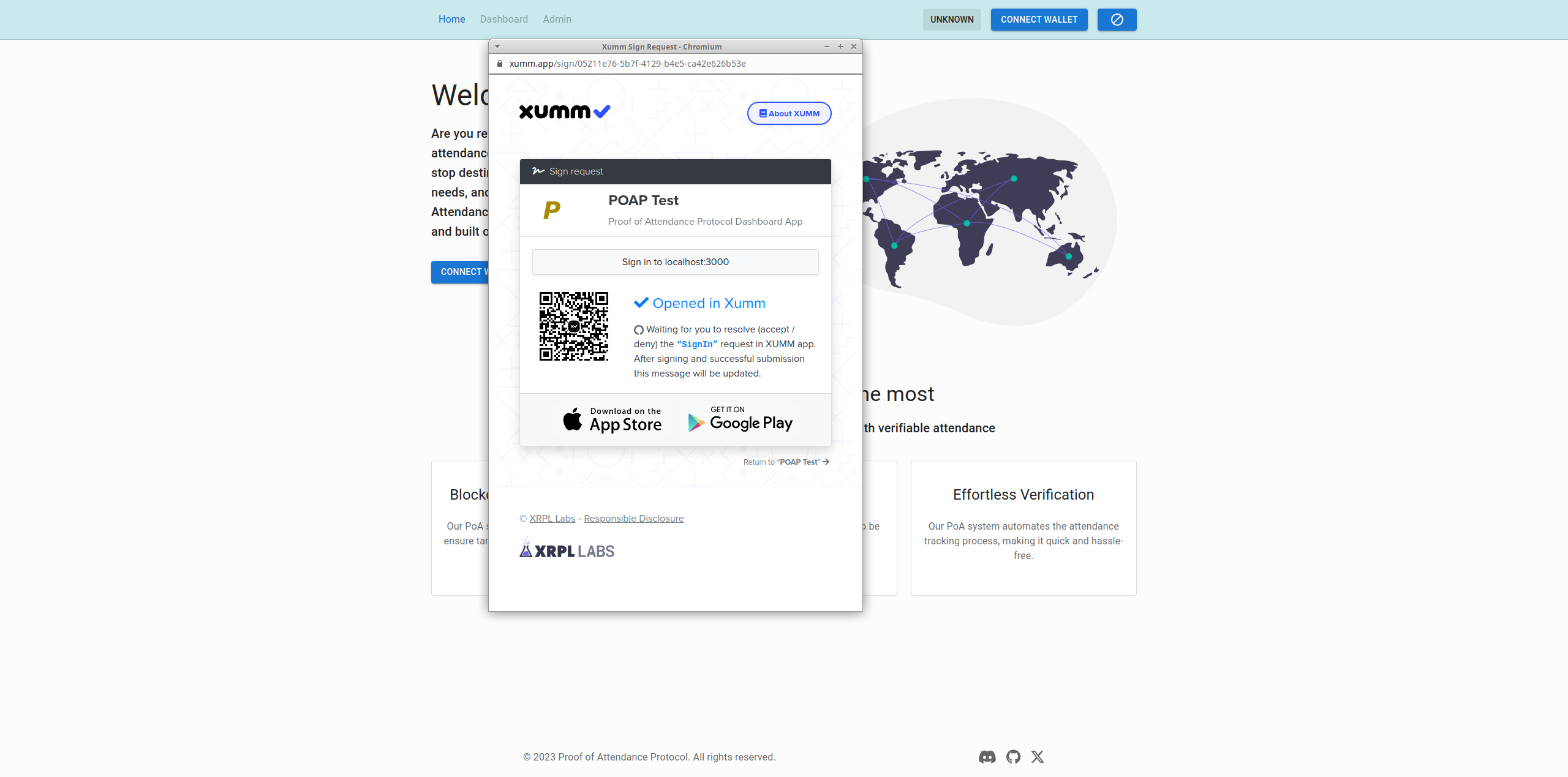
- Seamless Integration: Support for both Xaman (formerly Xumm, for mobile) and GemWallet (a browser extension similar to MetaMask), ensuring secure and user-friendly XRPL interactions.
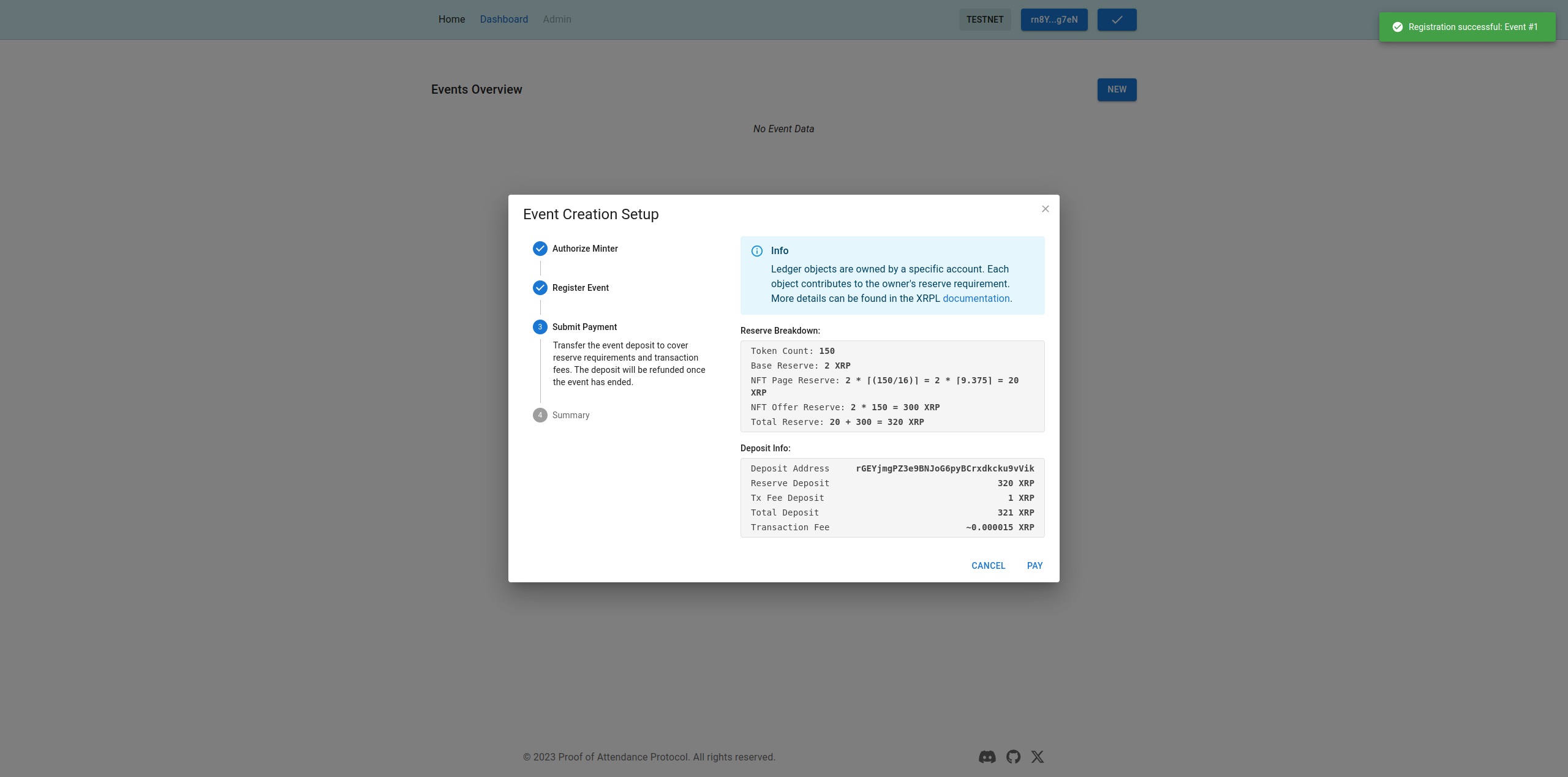
- Fully managed: The platform automates complex tasks like payment verification and NFT issuance.
The code is open-source and available on GitHub:
What is the XRP Ledger (XRPL)?
The XRP Ledger (XRPL) is an open-source, decentralized blockchain specifically designed for fast, low-cost, and energy-efficient payments. Unlike traditional blockchain systems that rely on energy-intensive mining, the XRPL uses a validator-based consensus algorithm for rapid transaction confirmation, making it both eco-friendly and fast. XRPL transactions settle in approximately 3-5 seconds, making it one of the fastest distributed ledgers available.
XRP is the native digital asset of the XRP Ledger, primarily used to facilitate cross-border payments and provide liquidity as a bridge currency. This allows users to exchange various currencies swiftly and at minimal cost.
In addition to payment processing, XRPL supports a variety of decentralized features and financial applications. These include tokenization, decentralized exchanges (DEX), and upcoming smart contracts, all of which enable developers to create innovative solutions for both financial and non-financial use cases.
What are NFTs?
NFTs, or non-fungible tokens, are a type of digital asset that represent ownership or proof of authenticity of a unique item using blockchain technology. Unlike cryptocurrency coins such as Bitcoin or Ethereum, which are fungible and interchangeable, each NFT is distinct and irreplaceable. This makes NFTs ideal for representing ownership of unique digital or physical items like art, music, collectibles, and even event tickets.
Consider a house as an example of a non-fungible asset. Each house is unique due to its location, size, amenities, and other features, making it impossible to swap one house for another and expect them to be identical.
NFTs are typically created, bought, and sold on blockchain platforms, with Ethereum being the most prominent for hosting NFTs. However, the XRP Ledger also supports NFT functionality, providing the added benefits of its low transaction fees and high-speed processing. By tokenizing assets on a blockchain, NFTs have unlocked new opportunities for creators and collectors alike, enabling direct transactions, royalties, and a new form of digital ownership that was previously not possible.
How does Proof of Attendance Work?
Instead of receiving a traditional paper ticket or an electronic PDF badge, event-goers are provided with NFTs that represent their attendance. These NFTs are stored in digital wallets and offer several advantages over conventional systems. Here’s how the process works:
-
NFT Creation: Event organizers or platforms mint a collection of NFTs on the blockchain. During this process, event details such as the name, date, time, and venue are embedded in the NFT metadata.
-
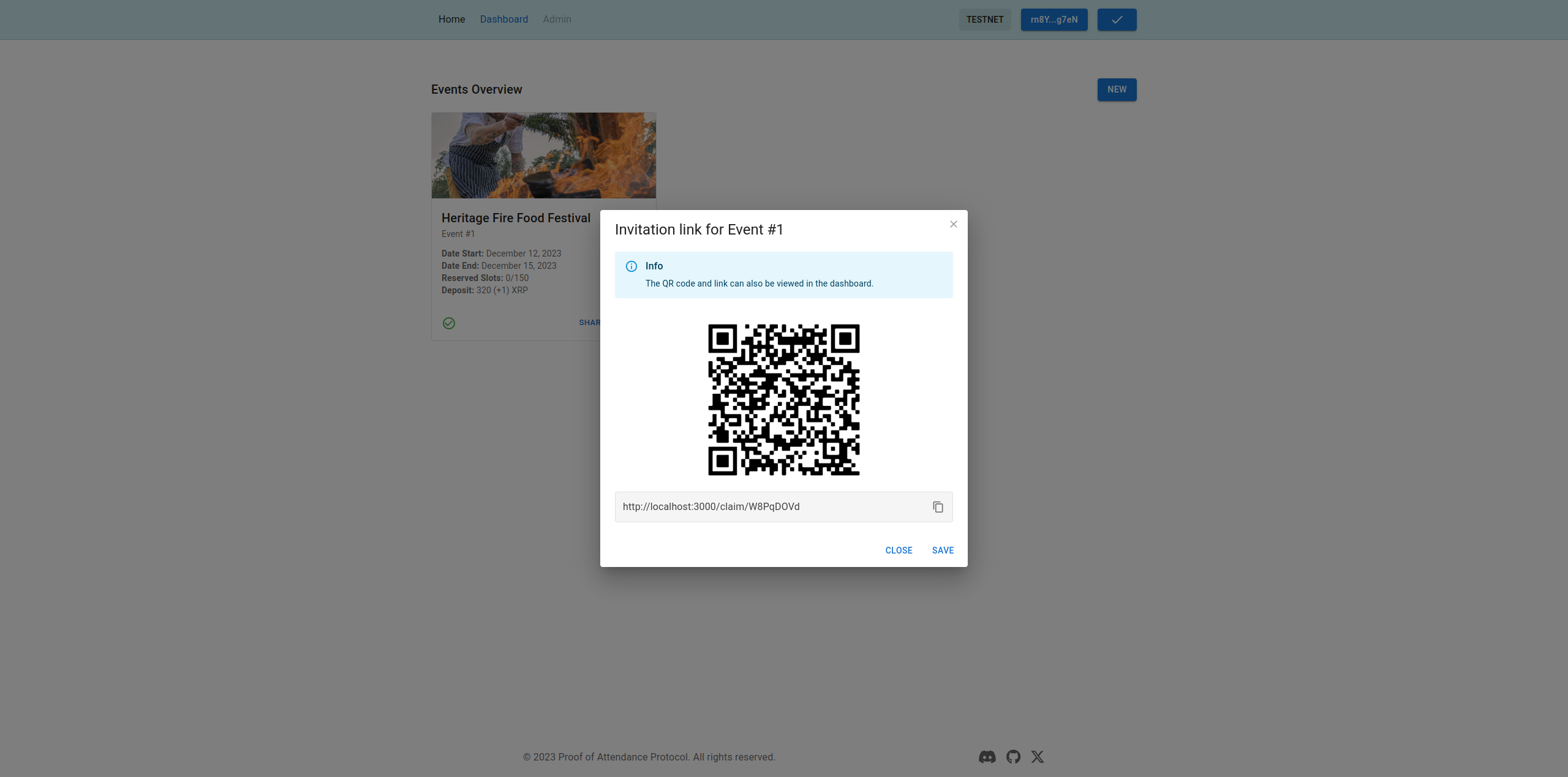
Ownership Transfer: After creation, NFTs can be sold or transferred to attendees. Each NFT is unique and can only be owned by one person at a time. The blockchain records the new owner’s wallet address when an NFT is transferred. Attendees typically collect these NFTs via QR codes at the event location.
-
Verification: Attendance NFTs can be easily verified using blockchain explorers or dedicated apps. Each NFT is uniquely tied to its owner, making duplication or resale without consent impossible.
Gallery